
Назад в будущее: тамиздат в эпоху (холодной) войны
Liberty Lisbon, Rua da Esperança, 21
02/12/2024 19:00:00
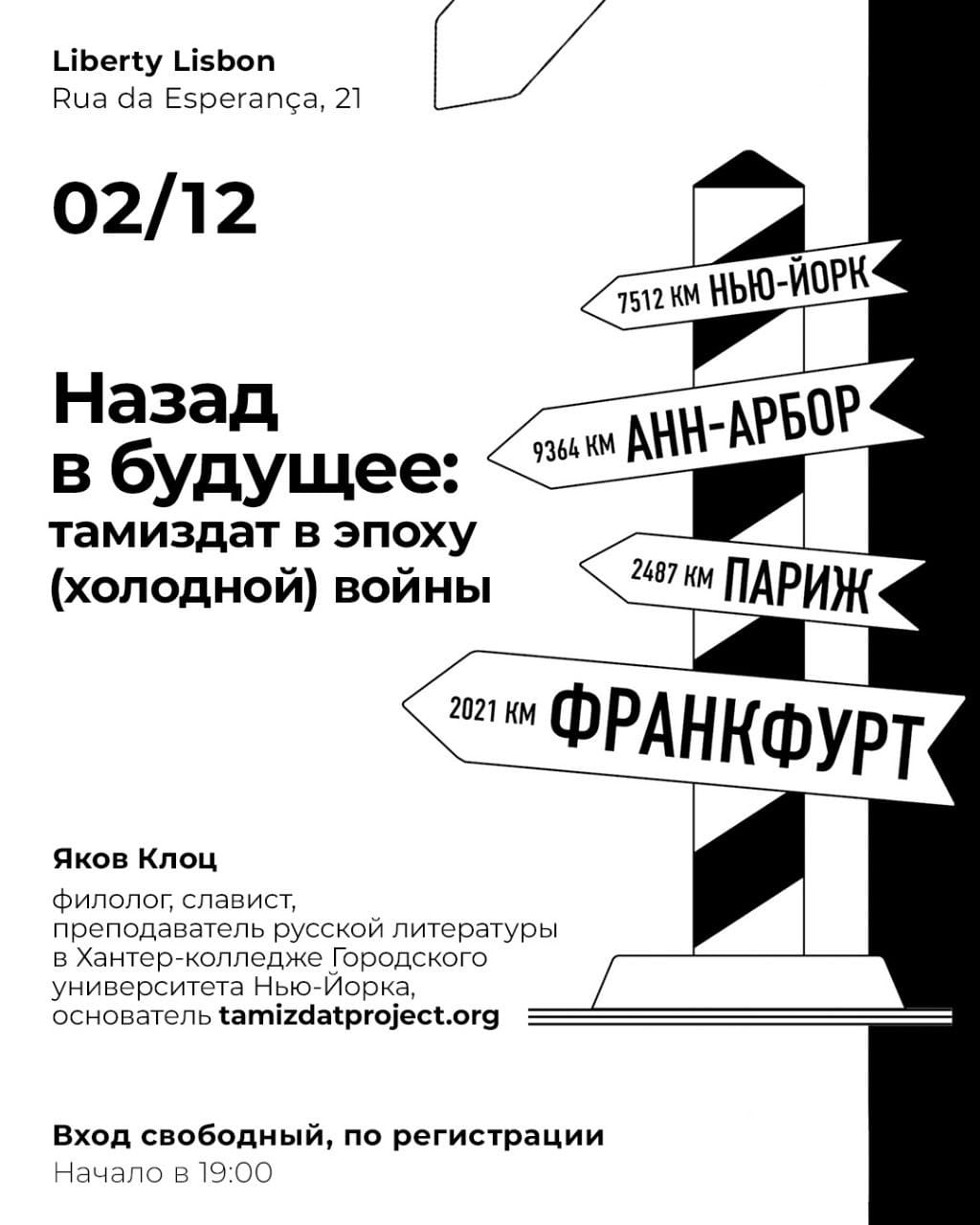
How did manuscripts banned from publication find their way from behind the Iron Curtain abroad, how were they printed and read in exile, what did the authors themselves know and think about it, and why is tamizdat (im)possible today? The conversation will focus on Russian-language tamizdat during the Cold War, its points of departure and contact with other Eastern European and Western cultures, whether tamizdat is limited to the Soviet period and geography, and the role of wars in (e)migration – of both authors and manuscripts. We will be able to discuss these questions using the example of Abram Tertz’s (Andrei Sinyavsky) story “Pkhents” (1957), which has just been published as a separate book by Tamizdat Project in Russian and English.
Yakov Klotz teaches Russian literature at the City University of New York. Author of the books “Joseph Brodsky in Lithuania” (2010), “Poets in New York: About the City, Language, Diaspora” (2016) and “Tamizdat: Contraband Russian Literature in the Cold War” (2024). Head and founder of the Tamizdat Project, dedicated to the study of the first publications and reception of “contraband” literature from behind the Iron Curtain.
A new book will be available for purchase and signing at the meeting.
Entrance is free, registration is required.
Как запрещённые к публикации рукописи попадали из-за железного занавеса за границу, как их печатали и читали в эмиграции, что знали и думали об этом сами авторы, и почему тамиздат (не)возможен сегодня? Разговор пойдет о русскоязычном тамиздате эпохи холодной войны, его точках отталкивания и соприкосновения с другими восточно-европейскими и западными культурами, о том, ограничивается ли тамиздат советским периодом и географией, и о роли войн в (э)миграции – как авторов, так и рукописей. Эти вопросы мы сможем обсудить на примере рассказа Абрама Терца (Андрея Синявского) «Пхенц» (1957), только что вышедшего отдельной книгой в издательстве Tamizdat Project на русском и английском языках.
Яков Клоц преподает русскую литературу в Городском нью-йоркском университете. Автор книг «Иосиф Бродский в Литве» (2010), «Поэты в Нью-Йорке: о городе, языке, диаспоре» (2016) и «Тамиздат: контрабандная русская литература в эпоху холодной войны» (2024). Руководитель и основатель Tamizdat Project, посвященного изучению первых публикаций и рецепции «контрабандной» литературы из-за железного занавеса.
На встрече можно будет приобрести и подписать новую книгу.